Mold is a biological organism. It grows wherever it has moisture, organic material to feed on, and enough warmth. In Northern Virginia, where summers are humid and older homes are common, those conditions exist in more places than most homeowners realize.
Understanding what mold actually is, what produces it, and what it takes to address it properly helps you make better decisions when you encounter it.
What mold needs to grow
Three things: moisture, a food source, and temperature above freezing. Drywall paper, wood framing, carpet backing, and ceiling tiles are all adequate food sources for mold. Your home contains all of them. The controlling variable is moisture.
Sources of moisture that lead to mold growth include:
Roof leaks that go undetected and keep wall cavities damp. Slow plumbing leaks under sinks or behind appliances. Condensation from inadequate insulation or HVAC issues. Flooding or water intrusion that was not fully dried. High indoor humidity over extended periods — particularly in basements without dehumidification.
The common thread is that many of these situations are not dramatic. You don't always notice them until the mold is already established.
Health concerns — what's documented and what isn't
There is a lot of misinformation about mold and health. Here is what is reasonably well-supported:
Mold produces spores that become airborne and can be inhaled. In people with respiratory conditions, asthma, or mold allergies, this can trigger symptoms. Prolonged exposure in enclosed spaces with elevated mold counts is associated with increased respiratory symptoms in healthy adults.
The "black mold" concern often refers to Stachybotrys chartarum, which produces mycotoxins under certain conditions. While it does appear in water-damaged buildings, it is not the only problematic mold species, and the presence of any significant mold growth in occupied spaces is worth addressing.
If you or your family are experiencing unexplained respiratory symptoms, frequent headaches, or fatigue that improves when you leave the house, indoor air quality should be on your list of things to investigate.
Testing: when it matters and when it doesn't
Mold testing is useful in specific situations: when you need a baseline measurement of indoor air quality before or after remediation, when there is disagreement about whether a problem exists, or when a third party needs to certify that remediation was successful.
Testing is not always necessary to determine whether you have a problem. If there is visible mold growth in your home, you have a mold problem. You don't need a test to confirm that — you need remediation. Where testing adds real value is in post-remediation verification. An independent lab sample confirms that spore counts have returned to acceptable levels, giving you documentation that the work was done correctly.
How remediation actually works
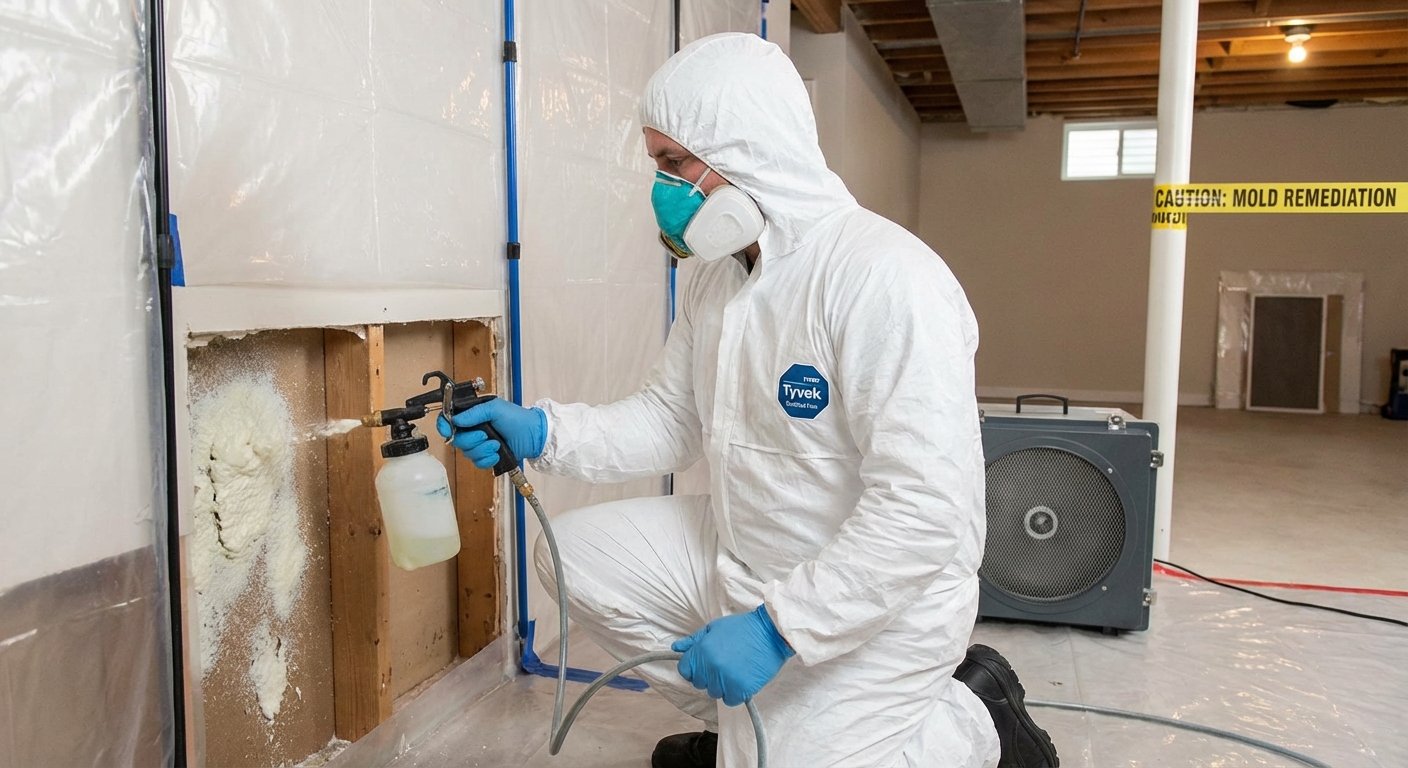
Mold remediation is not painting over a surface or spraying bleach. Those approaches kill surface mold temporarily but don't address the underlying colonization in the material or the moisture source that caused it.
Proper remediation involves:
Identifying and correcting the moisture source. Without this step, mold will return. Setting up containment to prevent spores from spreading to unaffected areas during removal. Removing affected materials that cannot be cleaned — drywall with deep colonization, for example, typically needs to come out. Cleaning structural materials and surfaces that can be retained using HEPA vacuuming and appropriate antimicrobials. Post-remediation clearance testing by an independent lab to confirm the area is within acceptable spore counts.
The scope of work varies significantly depending on the extent of growth, the materials involved, and how long the moisture problem was present.
The McLean and Northern Virginia context
Older homes in McLean, Vienna, and Potomac often have crawl spaces and unfinished basements that are not well-sealed or conditioned. These are common locations for slow-developing mold problems. A poorly conditioned crawl space can elevate humidity levels throughout the house during summer months.
If your home has a crawl space, it is worth having it inspected periodically — particularly after any period of elevated moisture. Vapor barriers, drainage, and ventilation in that space have a meaningful effect on the air quality in the living areas above it.
When to call a professional
If the mold-affected area is larger than 10 square feet, IICRC guidelines recommend professional remediation. For smaller areas, containment and careful removal using appropriate protective equipment may be sufficient — but the moisture source still needs to be resolved.
If the growth is in a wall cavity, behind flooring, or in a mechanical space, professional assessment is the right starting point. What is visible on the surface is rarely the full extent of the growth.
The goal of remediation is not just to remove what you can see. It is to return the space to conditions where mold cannot re-establish itself.