Water in your home is not just a surface problem. Within hours, moisture starts moving into subfloor materials, wall cavities, and insulation. Within 24 to 48 hours, conditions become favorable for mold growth. The actions you take — or don't take — in that first window have a real effect on how much of the damage is recoverable.
Stop the source first
Before anything else, figure out where the water is coming from. A burst pipe, a backed-up drain, a failed appliance connection — these need to be shut off at the source. If you are not sure where the shutoff is, turn off the main water supply to the house. Water that is still coming in cannot be managed until it stops.
Do not run fans immediately
This is a common mistake. People pull out box fans and point them at wet areas hoping to speed up drying. In a flooded space, fans can push moisture deeper into porous materials and distribute contaminated air throughout the home. Professional restoration uses controlled directional airflow with commercial-grade equipment calibrated to actual moisture readings — not household fans.
Document before you touch anything
Take photos and video of every affected area before moving furniture or pulling up materials. Walk through each room and capture the waterline, the affected materials, and the extent of spread. This documentation is critical if you are filing an insurance claim. Insurers will ask for it, and the more detail you have, the better your position.
Remove standing water carefully
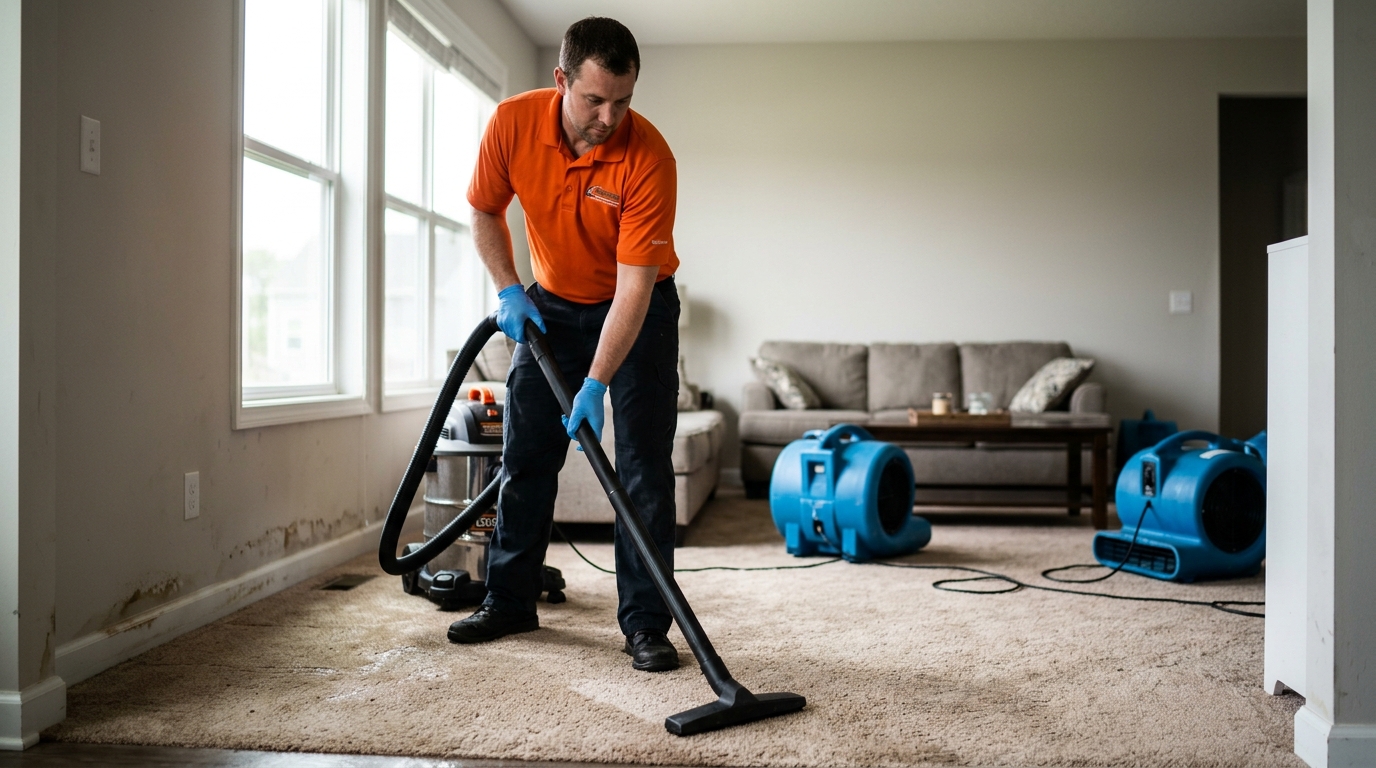
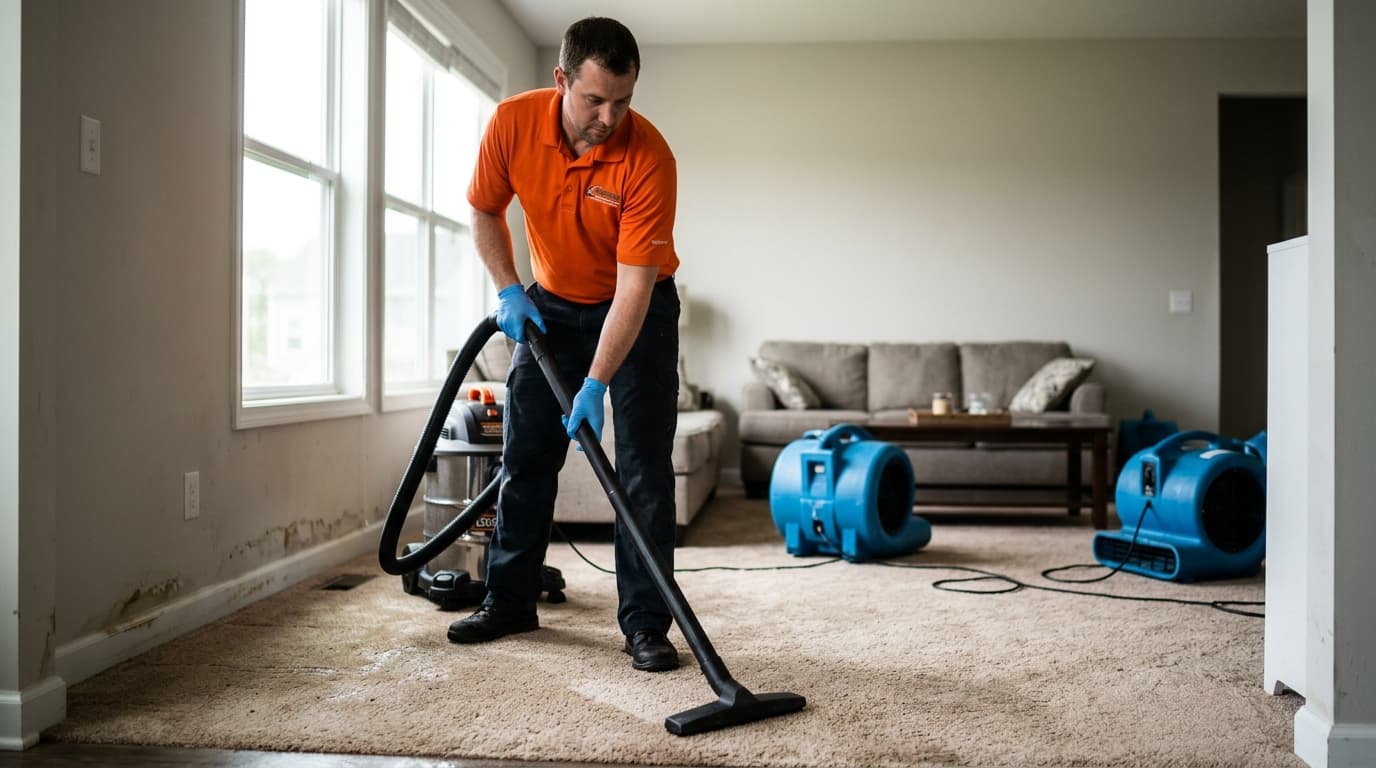
If there is standing water and you can safely remove it, do. Wet-dry vacuums work for smaller volumes. Avoid contact if you suspect the water has come into contact with sewage, chemicals, or electrical components. Water near outlets, panels, or submerged appliances should be left to professionals.
Call your insurer and a restoration company at the same time
Many homeowners wait to see how bad it is before calling. In water damage situations, time spent waiting is time the moisture is moving. Most IICRC-certified restoration companies can assess the situation quickly and tell you what needs to happen. At the same time, notify your insurer and get a claim number started — even if you are not sure you will file.
What a restoration company actually does
When a qualified team arrives, they will take moisture readings across affected surfaces using calibrated meters. This tells them how far the water has traveled, which materials are saturated, and what needs to come out versus what can be dried in place. They will set up commercial dehumidifiers and air movers configured to the specific conditions of the space.
Drying is not fast. Depending on the materials involved, a proper dry-out typically takes three to five days with daily monitoring. Anyone who tells you a flooded room is dry after a few hours is guessing.
When to be concerned about mold
Mold can begin growing within 24 to 48 hours in the right conditions: moisture, organic material, and warm temperatures. If the water damage is not addressed quickly, you are not just dealing with a drying problem — you are potentially dealing with a remediation problem on top of it. The two are different in scope, cost, and complexity.
If the water event happened more than 48 hours ago and areas were not dried out immediately, have a professional assess for mold growth before closing up walls or replacing materials.
A note on insurance claims
If you have a public adjuster involved, let them do their job before you agree to anything with your insurer. Insurance companies often offer early settlements that do not account for hidden damage — moisture in wall cavities, affected insulation, compromised subflooring — that only becomes apparent after proper investigation. A public adjuster works for you, not the insurer.
The first 24 hours matter. Getting the right people involved quickly makes a measurable difference in what is salvageable and what is not.